

DARE ROBOTICS, TU Darmstadt’s student robotics group, won the student category, followed by Modolino and MorphoGate. Tooliip took first place in the researcher category, ahead of PRIB and Nuvotis. BioLAB won two special awards: the Merck Sustainability Award and the Thomas Weiland Foundation’s Special Award for Science. The hessian.ai AI Innovation Award went to 4d.City.
HIGHEST congratulates all the winners. Twelve teams qualified for the final and pitched their ideas on stage. Here are the award-winning projects.
Student category

DARE ROBOTICS – First place: Student category

Modolino – Second place Student category
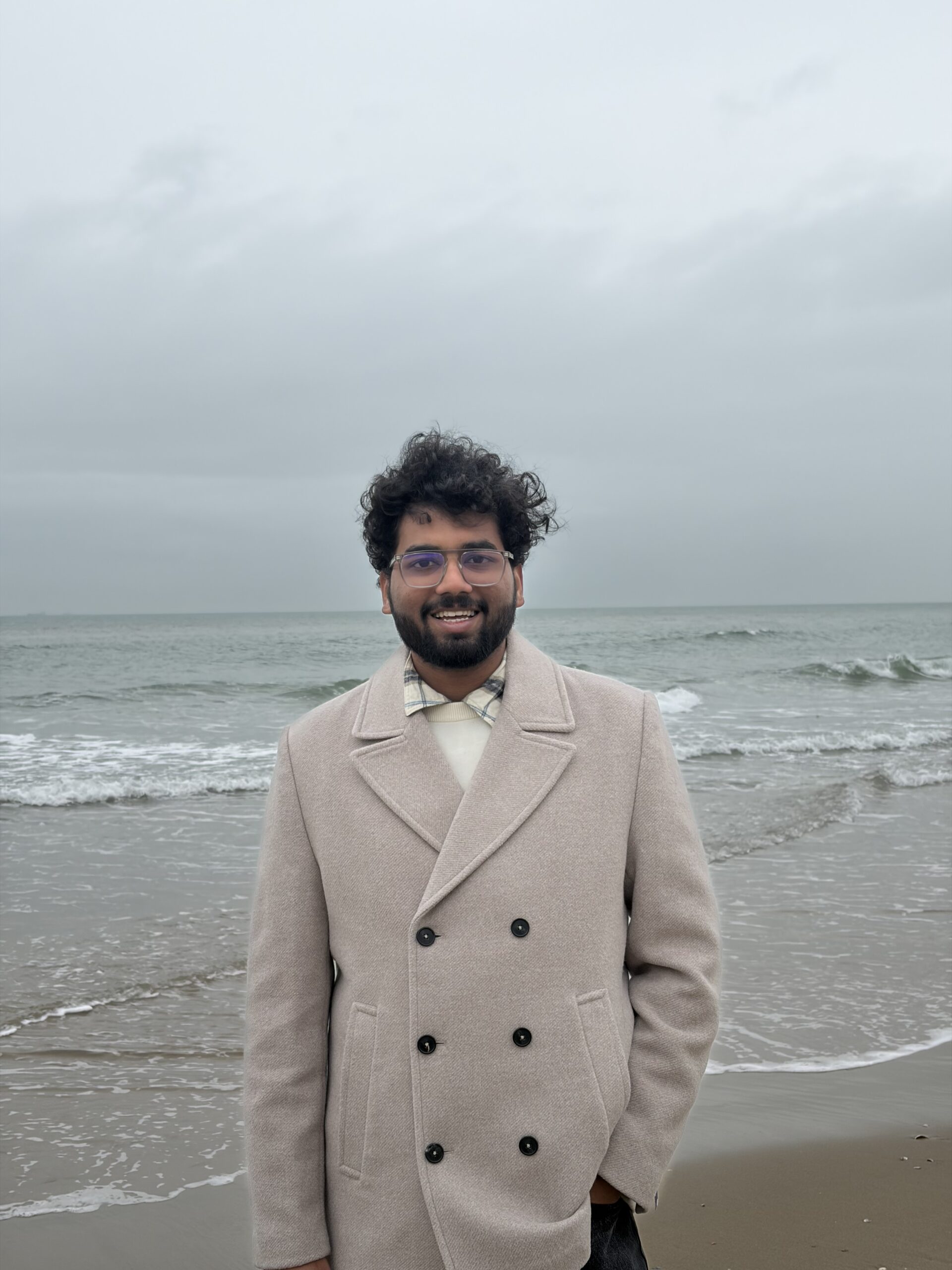
MorphoGate – Third place Student category
First place: DARE ROBOTICS
To truly understand how a robot works, build one yourself. Until now, that has rarely been an option for robotic arms: industrial models often cost tens of thousands of euros, and their inner workings remain hidden. DARE ROBOTICS, TU Darmstadt’s student robotics group, is developing ATHENE, a 3D-printed robotic arm with freely available build plans. Building it introduces users to motors, gear systems, electronics and software. An interactive guide is planned to explain every step. Anyone interested in contributing to its development is welcome to join the group.
Why the judges chose it: A strong pitch, a working prototype and an idea with clear potential to scale. The jury recognised the students’ initiative and the project’s benefits to society.
sponsored by HIGHEST
Second place: Modolino
Many children spend their free time in front of screens rather than trying things out for themselves. Modolino turns the kitchen into a laboratory, enabling children aged three to eight to experiment with vinegar, baking powder and other household ingredients. Seventeen animal characters guide them along the way, supported by free videos, instructions and experiment logs. Louis Rittersberger and Mateo Brecic came up with the idea. Today, it is used by a community of more than 100,000 families.
Why the judges chose it: A convincing founding team whose success on social media provides evidence of market demand. Modolino introduces children to STEM at a very early age, creates social value and uses character-led storytelling to engage children.
sponsored by StartHUB Hessen
Third place: MorphoGate
Before new cancer drugs enter clinical trials, they undergo preclinical testing. Conventional laboratory models, however, often fail to capture the full complexity of a tumour, with its many cell types and intricate interactions. Mohammad Aman is developing a method called “Programmed Morphogenetic Assembly”. It is designed to organise different cell types into tumour-like structures on an organ-on-a-chip platform. These models could enable researchers to study tumours more realistically and test treatments before they enter clinical trials.
Why the judges chose it: An independently developed project that aims to replace animal testing. While the idea still has considerable scope for development, the entrepreneurial drive behind it deserves recognition. The jury saw it as a particularly strong example of what the Ideas Competition stands for.
sponsored by Oddo BHF
Researcher category

Tooliip – First place Researcher category

PRIB – Second place Researcher category

Nuvotis – Third place Researcher category
First place: Tooliip
Everyone experiences Parkinson’s differently. The disease has no cure, and people often face multiple distressing symptoms each day. Tooliip offers people with Parkinson’s and their family carers personalised support through conversation, helping them manage everyday life. Voice-operated and multilingual, it is available around the clock via an app, smart speaker or telephone. Tooliip helps users record their symptoms and how they feel, turns this information into reports tracking changes over time, and identifies patterns. In future, it is also intended to support people with multiple sclerosis or dementia. The idea grew out of a personal family experience.
sponsored by Hessenmetall
Second place: PRIB
New medicines and greener industrial processes often depend on tailor-made proteins, such as antibodies or enzymes. Yet a protein that looks promising on a computer may fold differently in the laboratory or prove unstable. In PRIB, Bingyi Zhao, Haipei Liu and Xianglong Peng combine three approaches: AI proposes protein designs, physical principles predict their stability, and laboratory results feed back into the model. The aim is to increase the proportion of digital designs that become stable proteins, laying the groundwork for better medicines and more sustainable biotechnology.
Why the judges chose it: A strong scientific foundation and a potentially vast market. PRIB could significantly reduce the cost of protein production in sectors such as the pharmaceutical industry. The international team also impressed the jury.
sponsored by WSL Patentanwälte
Third place: Nuvotis
Animal testing is used in the development of new medicines before they enter human clinical trials. In Germany alone, around two million animals were used in experiments in 2024. Yet the findings do not always translate to humans. At Nuvotis, Louise Breideband, Levin Hafa and Francesco Pampaloni are working with their team to print human tissue from living cells, including skin, intestinal tissue and the lining of the mouth. The tissue is designed to behave like its natural counterpart, offering a way to test new medicines under realistic conditions and an alternative to animal testing.
Why the judges chose it: A clearly defined product with the potential for significant impact. Around 90 per cent of drug development programmes fail despite animal testing. Nuvotis identifies what does not work at an earlier stage, reducing both costs and the use of laboratory animals.
sponsored by Sparkasse Darmstadt und Dieburg
Special awards
Two awards for BioLAB
Merck Sustainability Award and the Thomas Weiland Foundation’s Special Award for Science
Surfactants are found in detergents, cleaning products and cosmetics. Linear alkylbenzene sulphonates (LAS), the world’s most widely used class of surfactants, are fully biodegradable but are currently made exclusively from petroleum. With BioLAB, Professor Marcus Rose and Eric Haberhauer are developing an entirely bio-based process for producing their precursors, linear alkylbenzenes (LAB). Renewable feedstocks and new catalytic processes are intended to reduce dependence on fossil resources and enable more environmentally friendly detergents and cleaning products.
Why Merck chose BioLAB: The project addresses a central challenge for the chemical industry: replacing fossil sources of carbon with renewable alternatives. The widespread use of LAS in detergents and cleaning products gives the approach considerable potential for application. BioLAB exemplifies sustainable innovation in chemistry.
hessian.ai AI Innovation Award: 4d.City
With 4d.City, Achref Doula and Professor Max Mühlhäuser are developing an AI-powered world model for cities. Unlike conventional digital twins, it does more than display data. It models buildings, roads and infrastructure in four dimensions, alongside vehicles, pedestrians and dynamic processes. Users can explore what-if scenarios and assess how reliable a prediction is. This supports decision-making, virtual reality training and planning for complex operations. A research prototype is already in place.
Why hessian.ai chose 4d.City: “The 4d.City team impressed us with an innovative solution for representing and simulating dynamic scenarios, with potential extending far beyond the urban planning use case presented. In recognition of this innovative potential, we are delighted to present 4d.City with the hessian.AI Special Award.”
The courage to put an idea forward
More than 120 projects were submitted this year. Students, researchers, alumni and interdisciplinary teams from TU Darmstadt developed their ideas and put them before a jury. That takes time. It also takes courage. Submitting an idea means opening it up to scrutiny by experts from business, academia and the start-up community. Our congratulations therefore go to all the finalists and everyone who took part.
The TU Darmstadt Ideas Competition helps teams take promising ideas forward. It gives teams expert feedback, raises the profile of their work and connects them with people who can help them move forward. For the winners, the work is only just beginning. HIGHEST looks forward to supporting their next steps.
We thank the sponsors who made the €21,000 prize fund possible: Hessenmetall, WSL Patentanwälte, Sparkasse Darmstadt und Dieburg, StartHUB Hessen, Oddo BHF, the Thomas Weiland Foundation, Merck and hessian.ai.
Special thanks go to the 20 members of the two juries. They read, assessed and discussed the submissions, drawing on their expertise in business, academia, finance and the start-up community to give teams valuable feedback. The TU Darmstadt Ideas Competition would not be possible without their commitment.
Written by Heike Jüngst