
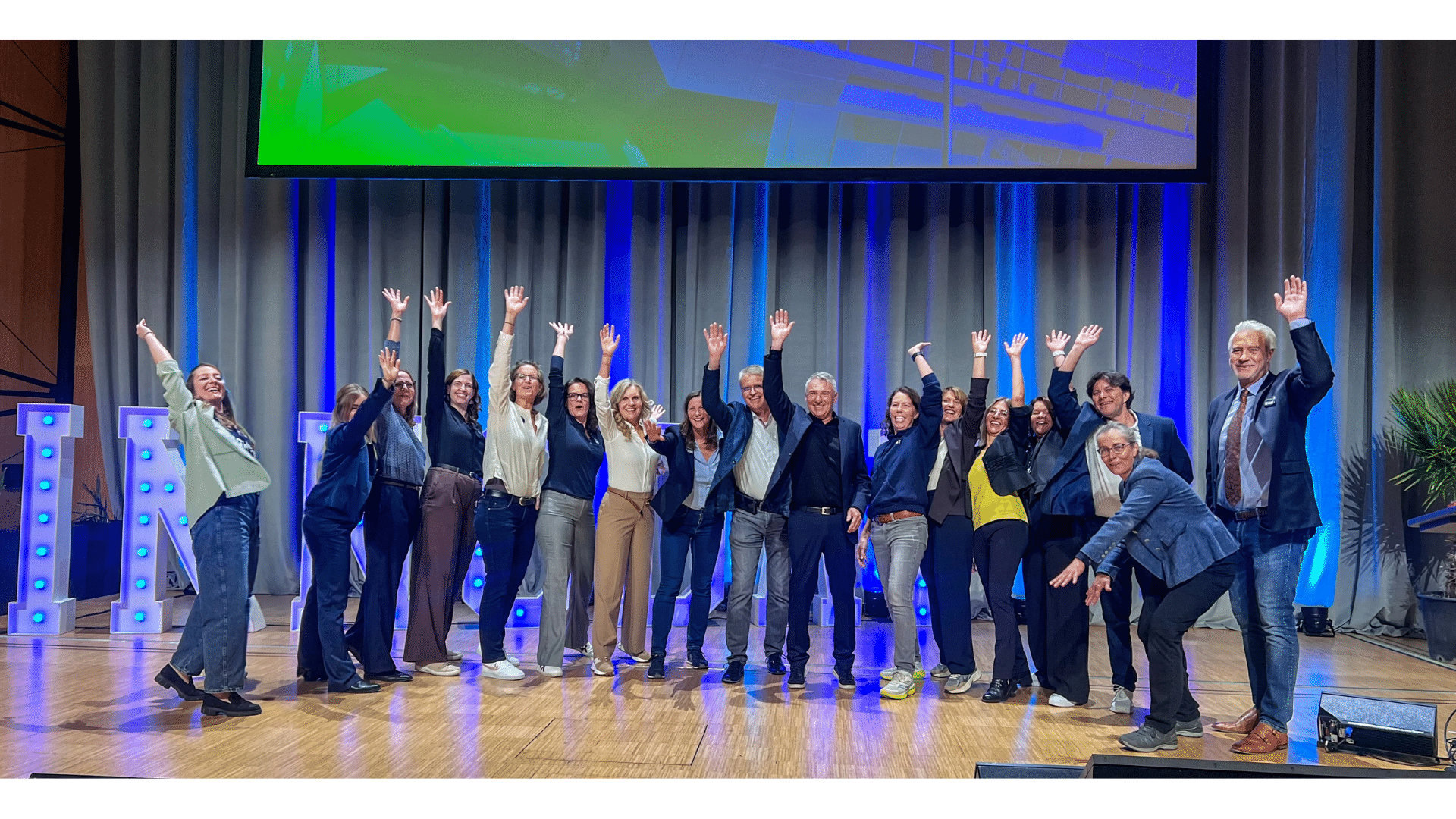
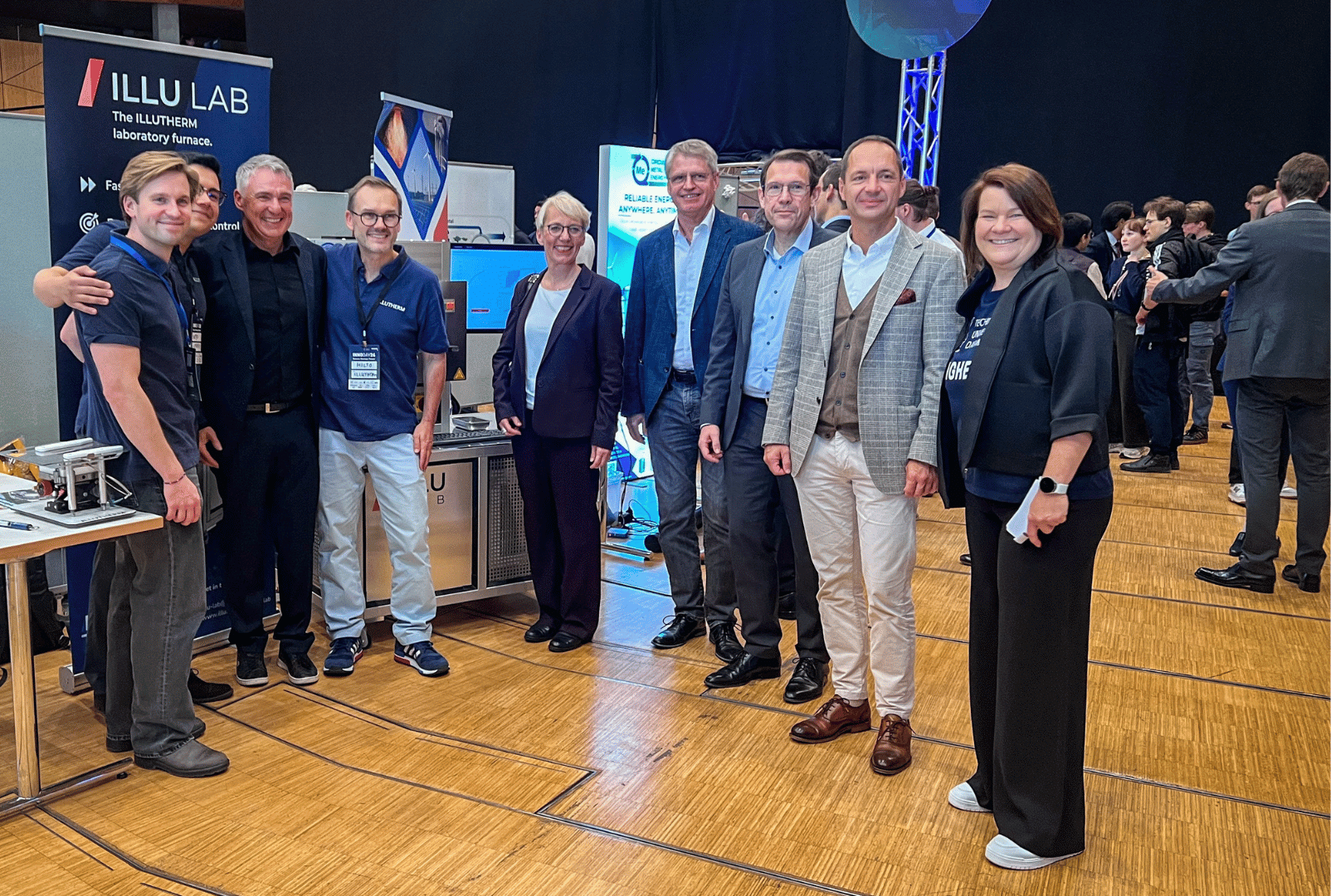
Booth from Illutherm u.a. mit Präsidentin Tanja Brühl, Vizepräsident Thomas Walther und Oberbürgermeister Hanno Benz
Darmstadt, 29 October 2026 – TU Darmstadt is bringing together more than 1,700 guests and over 115 exhibitors from start-ups, research and industry at the darmstadtium today for INNODAY26 – Science. Startups. Future! Now in its tenth edition, the event demonstrates how scientific ideas become new technologies and how cutting-edge research leads to companies and successful partnerships, in deep tech and beyond.
A striking example is Focused Energy. Founded in 2021 out of TU Darmstadt’s research environment, the company closed a USD 240 million Series A funding round in May 2026 — the largest fully secured Series A round in the fusion industry to date.
“Focused Energy’s success exemplifies our ambition at TU Darmstadt: we support founders from an idea in the lab to a market-ready product. This turns forward-looking ideas and scientific innovation into solutions that deliver lasting benefits for the economy and society. Together with our partners in the strong Rhine-Main ecosystem, we are making an important contribution to creating new economic value and ensuring that the region can thrive in the future,” said TU Darmstadt President Professor Tanja Brühl at the opening.
Kaweh Mansoori, Hessian Minister for Economic Affairs, Energy, Transport, Housing and Rural Areas and patron of INNODAY26, emphasised the importance of knowledge and technology transfer for Hesse’s economy: “Hesse’s economic strength tomorrow is being built wherever excellent research meets entrepreneurial courage and capital. INNODAY brings precisely these players together and demonstrates how scientific ideas can lead to new products, companies and partnerships. The key is to help these ideas find their way into practice: through reliable framework conditions, suitable financing opportunities and strong networks between research and business. Anyone starting a company or developing a new technology needs partners who recognise opportunities and make the next step possible. This is how we create the conditions for high-quality, future-proof jobs in Hesse — so that people in Hesse can enjoy good living conditions and reliable career prospects.”
INNODAY26 covers topics ranging from artificial intelligence, energy and deep tech to mobility, cybersecurity and new materials. “Today, we are experiencing our researchers’ remarkable ingenuity first-hand,” said Thomas Walther, Vice President for Innovation and International Affairs. He added: “The interplay of creativity, willingness to take risks and entrepreneurial spirit on display here was a key factor in the success of EXCITE, our RMU Excellence Initiative.”
Across 3,000 square metres of exhibition space, start-ups and research projects are presenting new technologies, promising prototypes and innovative business ideas. Keynotes, pitches and live sessions bring researchers and founders together with companies, investors and other partners from Hesse and the Rhine-Main region.
INNODAY is organised by HIGHEST, TU Darmstadt’s Innovation and Start-up Centre. Since its launch in 2017, the event has become an integral part of Hesse’s entrepreneurship, innovation and knowledge and technology transfer landscape. It provides a central networking platform connecting research, start-ups, investors and industry, exemplifying TU Darmstadt’s commitment to translating scientific excellence into economic and societal impact.
For Hanno Benz, Mayor of the City of Science Darmstadt and responsible for economic affairs, INNODAY also strengthens the links between research and business in the city: “Our ability to thrive as a business location in the future depends to a large extent on how effectively we connect research and business. INNODAY exemplifies how TU Darmstadt and HIGHEST help turn research ideas into entrepreneurial opportunities and strengthen Darmstadt’s capacity for innovation over the long term — beyond the city’s boundaries as well.”
Harald Holzer, Managing Director of HIGHEST, highlighted the conditions needed for successful knowledge and technology transfer: “INNODAY demonstrates the entrepreneurial potential within our universities. Our task is to identify promising technologies early, build strong founding teams and connect them with capital, industry and the right partners. Successful companies do not emerge by chance — they need a high-performing ecosystem that consistently brings scientific excellence to market.”