Bild: Claudia Becker
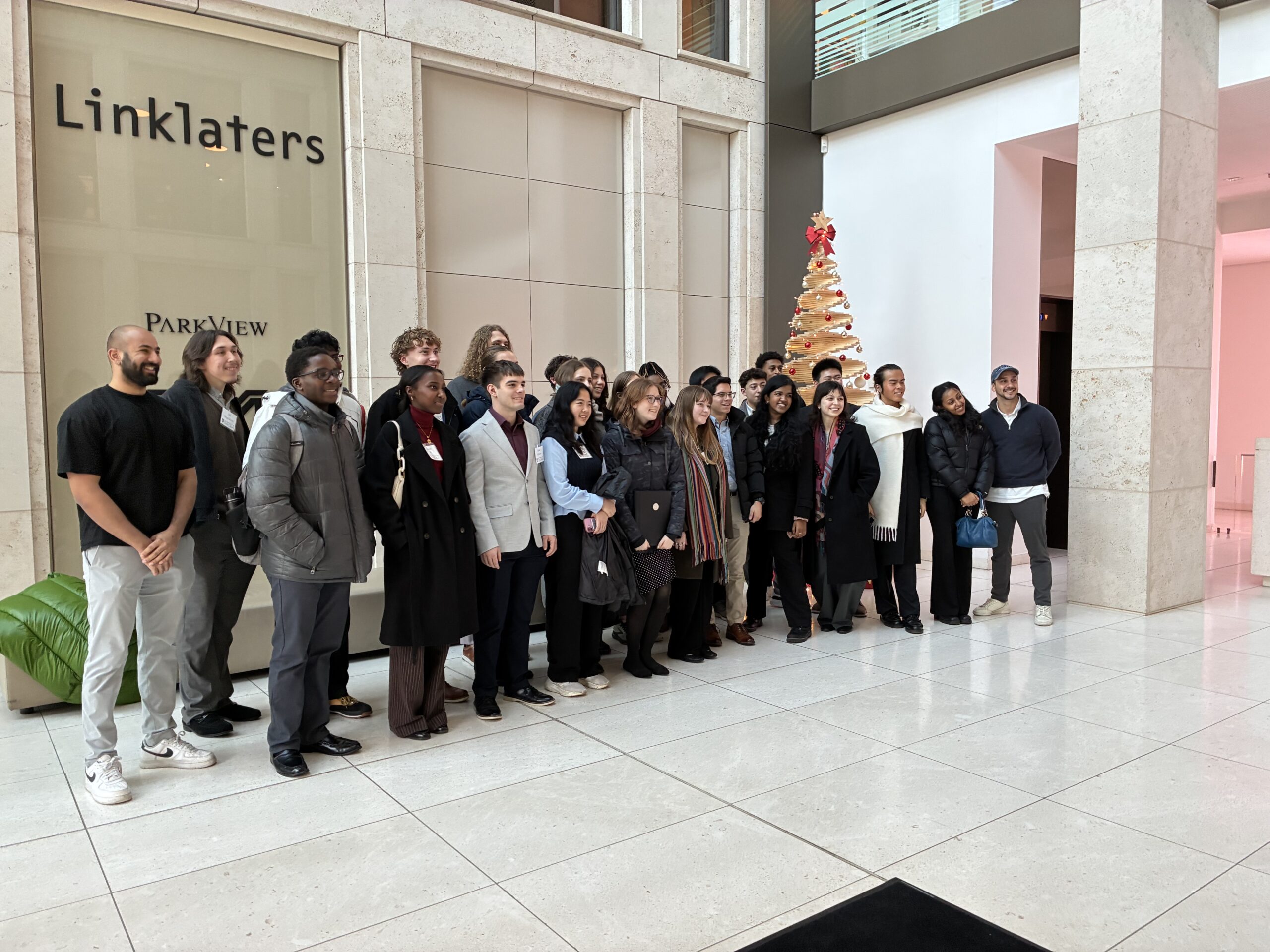
Darmstadt/Frankfurt. 36 students from the University of Chicago visited HIGHEST and TU Darmstadt to experience Europe’s DeepTech landscape first-hand. The program, organized by Chiara Montanari in collaboration with the Center for International Careers at the University of Chicago, focused on one core goal: making entrepreneurship a tangible career path – from internships to first full-time roles in Europe.
The delegation is part of a broader University of Chicago initiative: in total, around 700 students are currently in Europe to get to know different countries, companies and labor markets – and to build networks for future career steps.
Insights into the startup infrastructure at TU Darmstadt
The visit kicked off on Monday at HIGHEST and TU Darmstadt. Sabine Remmert presented HIGHEST as the university’s innovation and startup center and provided insights into the FUTURY Startup Factory – including its network of universities, corporate partners and investors.
One aspect stood out clearly in the students’ feedback: they experienced the approach as “surprisingly hands-on” and at the same time strongly connected across universities. Several participants described the visit as a shift in perspective – away from a purely academic lens towards concrete pathways for turning research and technology into startups.
At Telekinesis: robotics up close – including learning by doing
On Tuesday, the group continued on to Frankfurt to visit Telekinesis, a TU Darmstadt spin-off. Co-founders Arjun Vir Datta and Christian Castro Büch spoke about their journey as a team – currently around ten people sharing one office – and about the dynamics that shape everyday life in a startup.
They also outlined their vision clearly: “At some point, each of us will have a robot – just like we all have a smartphone today.” Telekinesis is working on enabling robots to learn and making them easier to program – essentially building the “brain” of the robot.
There was also room for critical questions, including the ethical implications of AI and its impact on the future of work. Büch described this as one of the key questions that has stayed with him since entering the field: AI will change many things, and societies will have to redefine how they think about work.
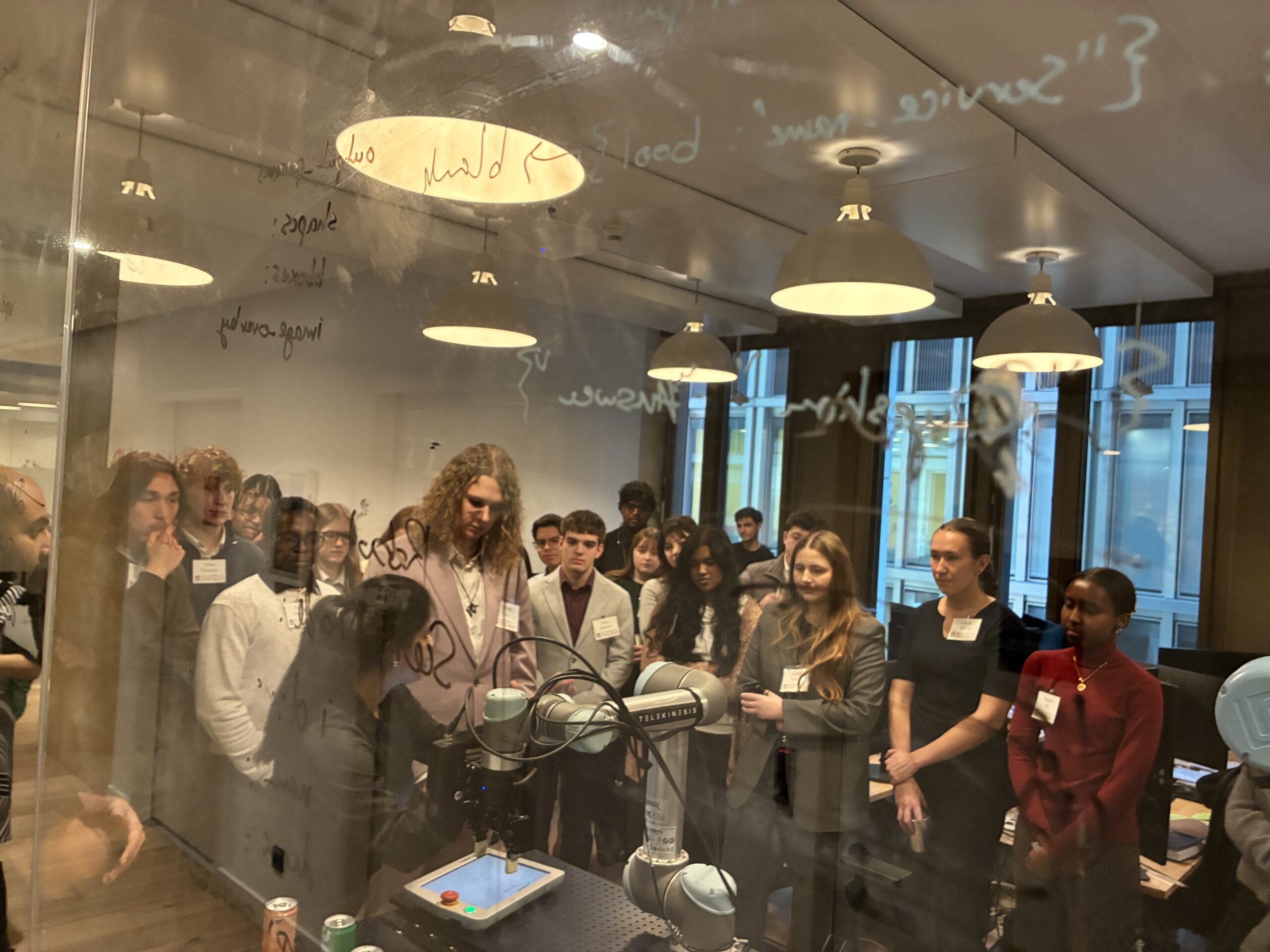
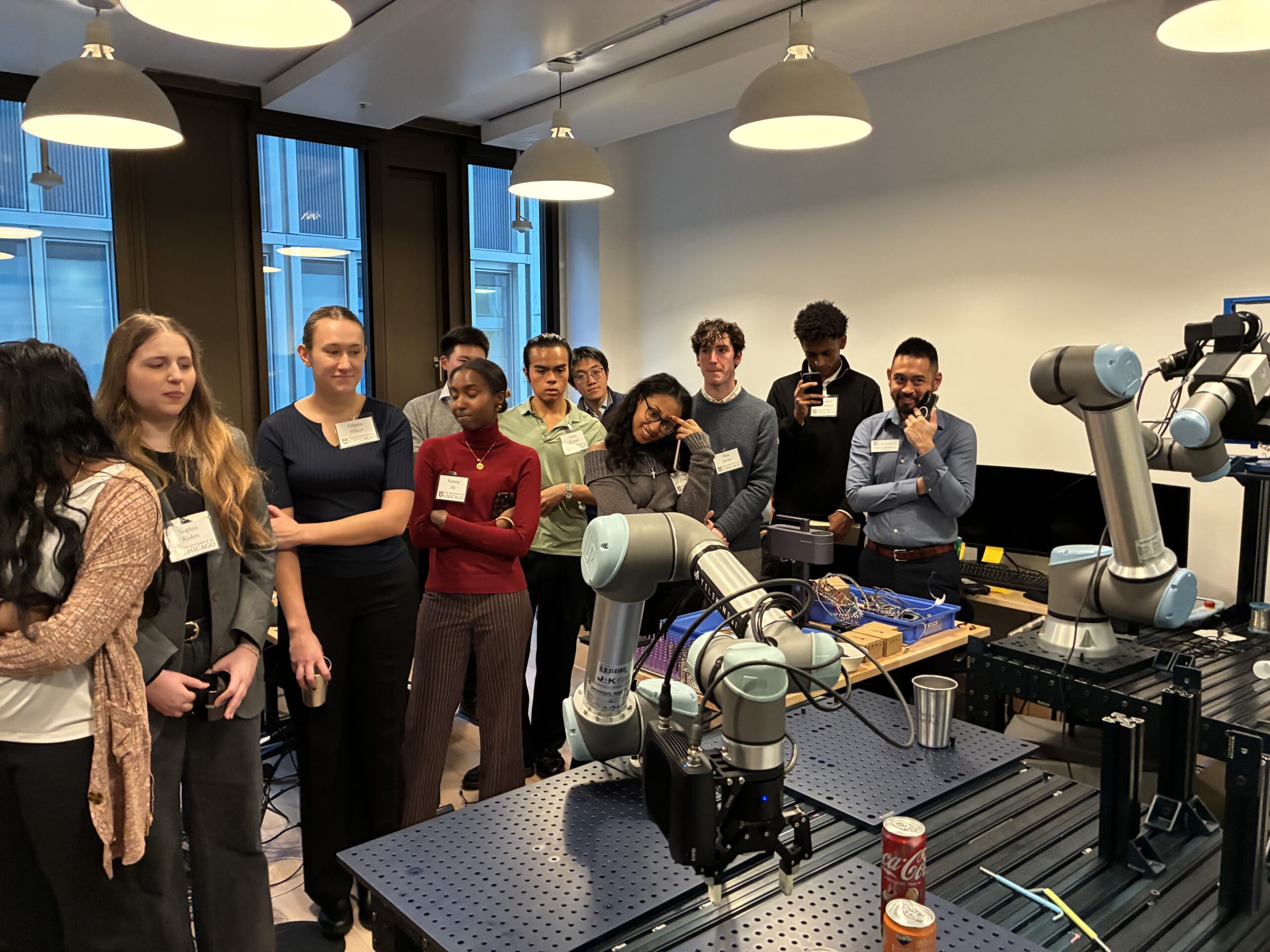
One moment particularly stuck with many attendees: during a tour of the office, the students were invited to program a robot themselves – with a seemingly simple task: grab a soda can, move it across and pour it into a cup. The sequence worked, but the first attempt came with an unexpected twist: the robot released the can a bit too early, and it slipped away – laughter in the room, and at the same time a very concrete learning. When humans and robots collaborate, trial and error is part of the process.
Support from day one – and connections for tomorrow
When asked about the role HIGHEST played in the early phase, the founders emphasized that support started very early on – including an initial investment that proved to be a decisive leap for Telekinesis. For the students, this closed the loop: from the supporting infrastructure at the university to the reality of everyday startup life.
And who knows – perhaps they will meet again: in an internship or at the start of a career in Europe.
Text: Claudia Becker